
Awaken your inner divinity by cultivating a living connection with the oldest named deities on Earth.
Sumerian spirituality was not a rigid religion in the way we understand religion today, but an integrated part of cosmic order and daily life. The gods were understood as real forces within the structure of existence, and their presence was reflected in the movements of the heavens, the cycles of nature, and the patterns of human experience.
Rather than being confined to belief alone, spirituality was lived; expressed through observation, ritual, and alignment with the order of the cosmos.
While temples served as central places of ritual and ceremony, spiritual life was not limited to them. Households and families maintained their own relationships with the divine, often through personal or household deities who watched over them.
Offerings, prayers, and simple acts of devotion were part of maintaining these relationships, creating an ongoing exchange between individuals and the divine forces present in their lives.
Through devotion, attention, and relationship with the gods, something within the individual begins to awaken. The act of honoring the divine is not separate from oneself; it cultivates clarity, strength, and presence.
Those who feel drawn to the Sumerian gods, language, or traditions often find that this connection deepens over time, revealing both a relationship with the divine and an awakening of personal power and inner divinity.
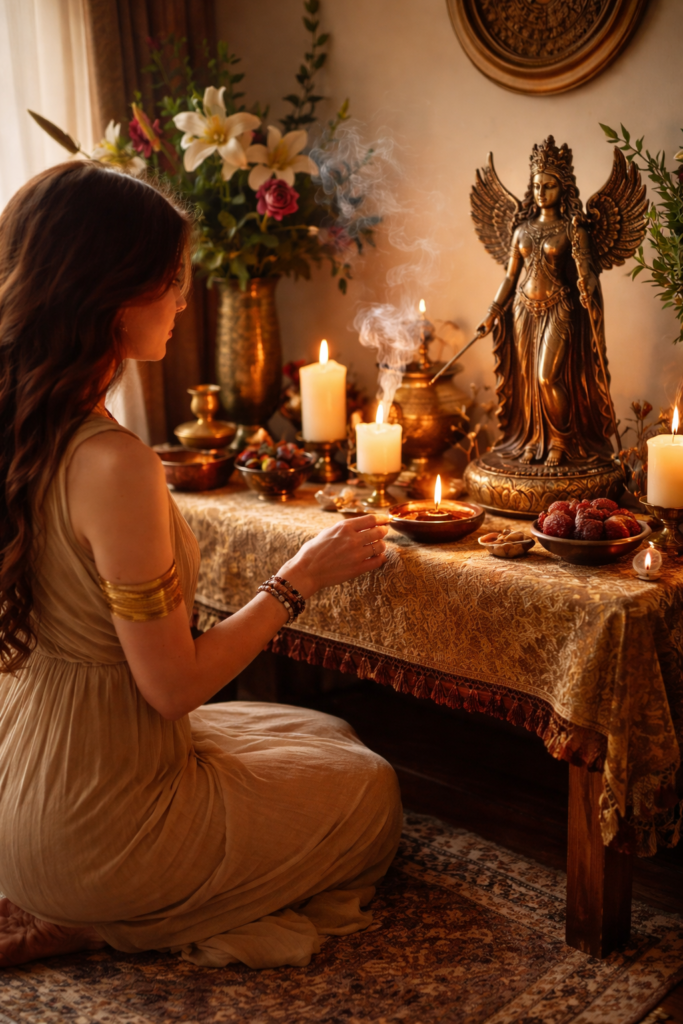
A personal shrine is a sacred space where you establish and maintain your relationship with the gods. It does not need to be elaborate or expensive—what matters is intention, consistency, and presence. In ancient practice, devotion was not limited to temples; households maintained their own spaces for offering, prayer, and connection. Your shrine becomes a focal point for ritual, a place where the divine is acknowledged and engaged in your daily life.
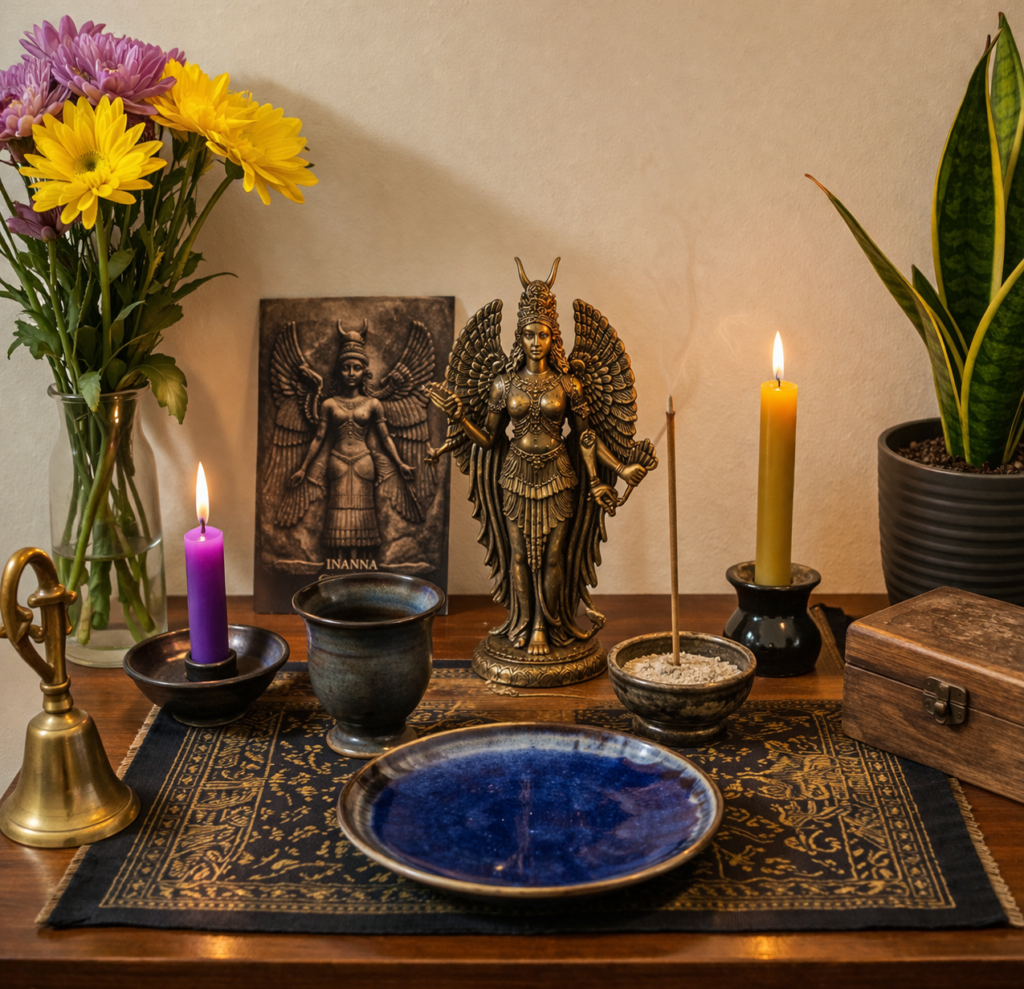
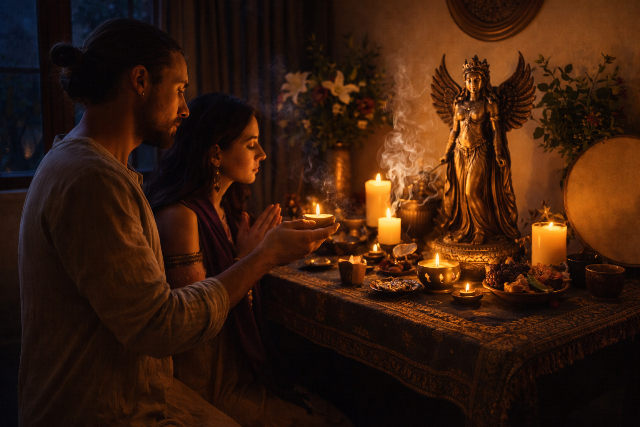
Sumerian ritual is not a rigid or fixed system, but a living practice shaped by intention, presence, and personal connection with the gods. While there are traditional structures that can guide the flow of a ritual, you are not required to follow any specific form.
You are encouraged to engage in the actions that you feel genuinely drawn to—whether standing, kneeling, sitting, bowing, or moving freely. Ritual is an act of relationship, not obligation, and it becomes most powerful when approached with sincerity, awareness, and openness to the divine.
© 2026 Temple of An. All Rights Reserved.